Using POWERbreathe IMT
If you are entering a competition, only perform the inspiratory warm-up and do not perform any inspiratory muscle training sessions that day. If you want to prepare your breathing muscles before daily training, such as running, consider your warm-up session one of your two breathing training sessions.
Find out more about how an Inspiratory Muscle Training Warm-Up Boosts Your Performance.
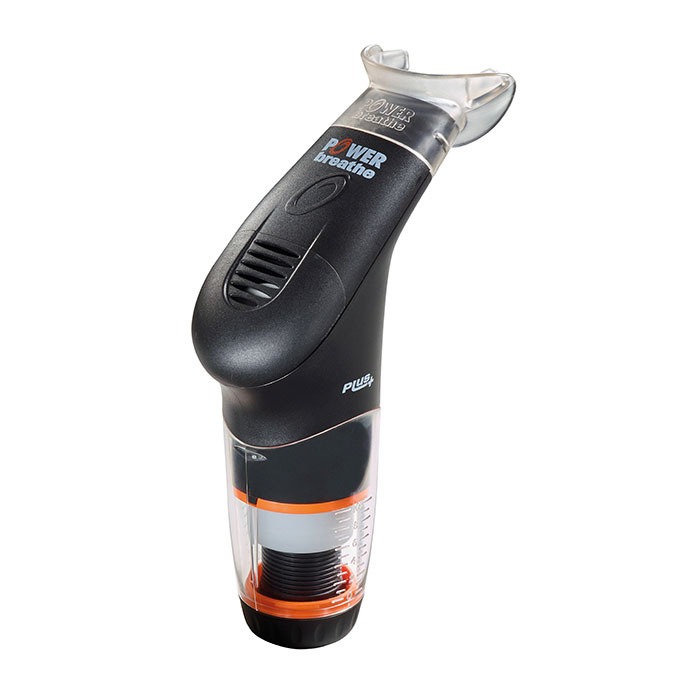
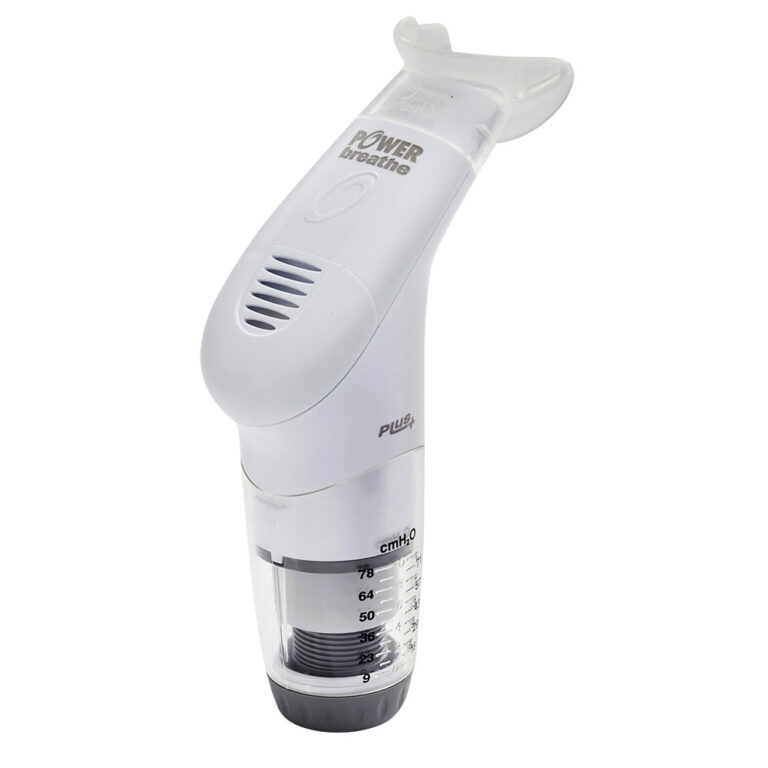
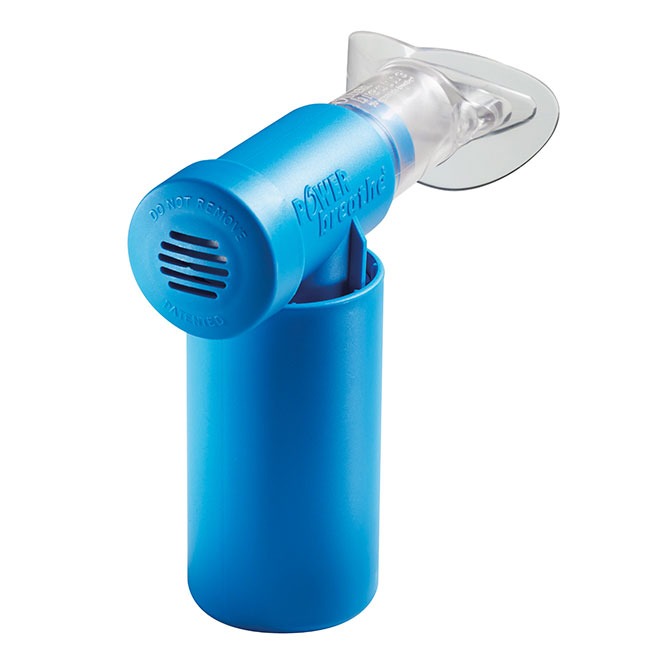
POWERbreathe offers the widest range of scientifically proven Inspiratory Muscle Training (IMT) devices, to cater for individual needs and budgets. Our range of POWERbreathe respiratory devices includes those specifically for Inspiratory Muscle Training (IMT) and those specifically for Expiratory Muscle Training (EMT). These make up a suite of devices for respiratory muscle training.
Compared to some breathing trainers, our breathing devices apply a resistance to airflow that is limited to one breathing phase only, in each device: the inspiratory phase in our Inspiratory Muscle Training (IMT) devices, or the expiratory phase in our Expiratory Muscle Training (EMT) devices.
We used the most widely studied and applied method of breathing training, Pressure Threshold Loading, to generate a load on breathing. We created this via a precisely calibrated, spring-loaded pressure threshold valve in our POWERbreathe Classic and POWERbreathe Plus series of IMT devices and our POWERbreathe EX1 EMT range of devices. This method of training ensures that your training intensity is quantifiable and appropriate.
The other main class of resistance training uses Passive Flow Resistance to generate the breathing load. But, at POWERbreathe, we went one better, and developed a series of electronic IMT devices that use a dynamically adjusted flow resistance to generate the load. This is because we wanted to remove the limitations inherent in passive flow resistance devices that use a simple dial for selecting different sized airway holes, which subsequently result in unreliable and unquantifiable loading.
Our POWERbreathe K-Series and KH-Series (designed specifically for the medical market) overcome the inherent limitations of passive flow resistance devices, while also improving upon the training experience that pressure threshold loading provides, by preventing breath clipping.
Researchers have recognised that the POWERbreathe K-Series provides automatically processed and valid estimates of physical units of energy during loaded breathing tasks. This enables healthcare providers to quantify the load on inspiratory muscles during these tests in daily clinical practice.
Furthermore, a 2023 study concluded that the POWERbreathe K-Series S-Index®Test may be a useful tool to measure functional inspiratory muscle strength in athletes.
POWERbreathe also proudly acknowledges the use of the POWERbreathe K3 in the University of Colorado’s major clinical trial that was published in the Journal of the American Heart Association. It found that Inspiratory Muscle Strength Training (IMST) lowers blood pressure and reduces heart attack risk.
POWERbreathe developed the very first Inspiratory Muscle Training device on the market over 20 years ago. We worked with leading UK Sports Scientists who recognised that breathing not only presents a limitation to athletes but also impacts exercise tolerance in patients with respiratory illnesses and healthy people.
POWERbreathe is the only brand of inspiratory muscle training (IMT) devices, named in the WHO 2021 guidance on the clinical management of the COVID-19 pandemic.
It’s the POWERbreathe brand of IMT devices that have been selected for the training intervention in over 100, independent and impartial, medical and sports research studies.
Watch our video answering What is POWERbreathe?
Elevation masks were developed to simulate breathing at altitude, by restricting the amount of oxygen that you receive whilst training. The thinking is that this restriction will make your heart and lungs work harder, training your body to adapt to a reduced oxygen intake.
POWERbreathe IMT exercises your inspiratory muscles, mainly your diaphragm and intercostals, using the most widely studied and applied methods of breathing training. POWERbreathe inspiratory muscle training uses a form of resistance training to generate a ‘load’ that you breathe in against. Breathing in against this adjustable, variable load increases your breathing strength and stamina and reduces breathing fatigue. Training and strengthening your breathing muscles with POWERbreathe IMT is good preparation for breathing at altitude, as it helps you to make the most of the limited oxygen at higher elevations.
Watch our video explaining POWERbreathe IMT
POWERbreathe doesn’t increase VO2 but a result of inspiratory muscle training is that it enables greater blood flow to your other working muscles (legs and arms) so that you can exercise for longer without feeling so fatigued. When your breathing muscles get tired, they can ‘steal’ blood from other exercising limbs to supplement their work, so improving the efficiency of the lungs has the knock-on effect of increasing the performance of your other working muscle groups.
Neck problems are very rare when using POWERbreathe but have been known to occur when breathing against very heavy loads and in people with a history of neck injury e.g. whiplash. Our advice is as follows:
- In order to warm-up before training with POWERbreathe, perform a warm-up session mode; alternatively perform 10 breaths set the load to 80% of you normal resistance (e.g. if you normally train at level 5, set the POWERbreathe to level 4). Perform a set of 30 breaths at this level prior to training at your normal intensity. This should help warm-up the muscles in the neck and chest
- Now perform your normal set of 30 breaths – try to breathe from the chest and diaphragm, keeping your neck as relaxed as possible. If you are still experiencing discomfort, reduce the load slightly – it is important to take controlled breath as well as pushing yourself. Remember that the same principles apply to POWERbreathe as with any other resistance training
- If you perform uncontrolled movements at high intensities then you may be increasing the risk of muscle strain. If the pain continues, we would advise that you consult your doctor or chiropractor as the problem is likely to be due a slight displacement of a vertebrae (of the kind experienced when one gets a ‘crick’ in the neck’) rather than to a muscle strain The load results on the POWERbreathe unit and pressure value on the Breathe-Link IMT suite do not correlate.
No. There is a strong argument for the use of expiratory and inspiratory muscle training to be performed independently of each other. This is because it is extremely difficult to train with maximal effort when both breathing phases are loaded at the same time.
During normal expiration, your lungs will start to deflate as your inspiratory muscles relax. However, during periods of active breathing, such as exercise or coughing, your expiratory muscles (internal intercostals, rectus abdominis, external and internal obliques, transversus abdominis) may contract to force air out of your lungs. Therefore, training your expiratory muscles will help to improve their strength and function.
During normal expiration, your lungs will start to deflate as your inspiratory muscles relax. However, during periods of active breathing, such as exercise or coughing, your expiratory muscles may contract to force air out of your lungs. Therefore, training your expiratory muscles will help to improve their strength and function.
Remember, recovery is an important part of the training process and your inspiratory muscles need time to rest and adapt between training sessions, so our recommendation would be 6 hours.
You should breathe in quickly and forcefully through the POWERbreathe (enabling you to ‘lift’ the weight/resistance), and then breathe out naturally as you would normally. Do this 30 times, twice a day. When you feel it getting easier, and you can easily manage the 30 breaths without reaching the point of failure, then increase the resistance a quarter turn. This will be your new training load.
POWERbreathe is not suitable for children under 7 years (due to small parts) and anyone under 16 should only use POWERbreathe under the supervision of an adult.
We advise you not to use your POWERbreathe if you are suffering from a cold, sinusitis or a respiratory tract infection until all symptoms have disappeared.