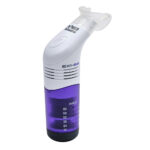
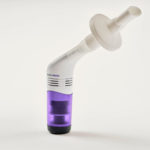
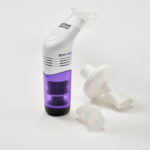
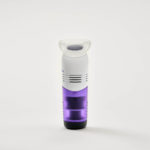
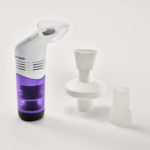
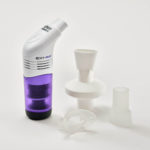
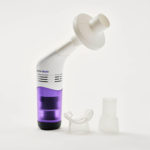
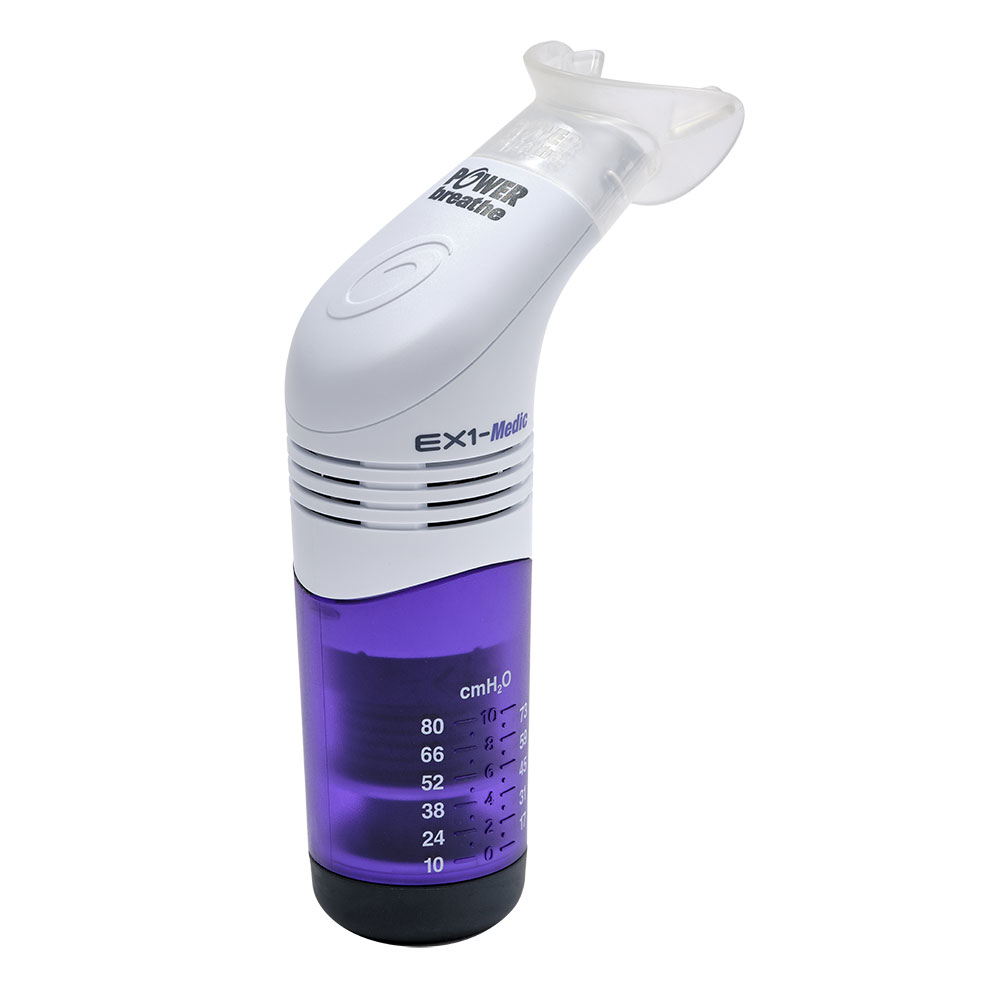
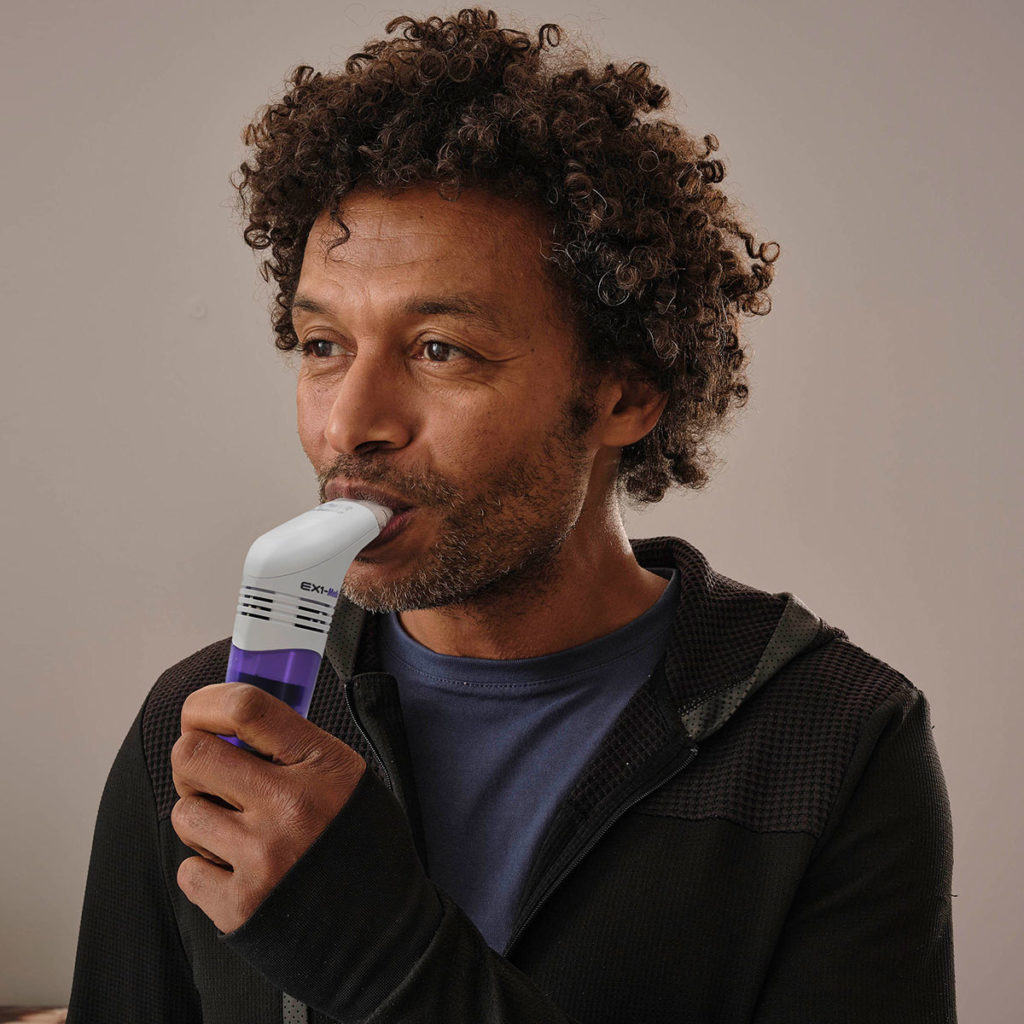
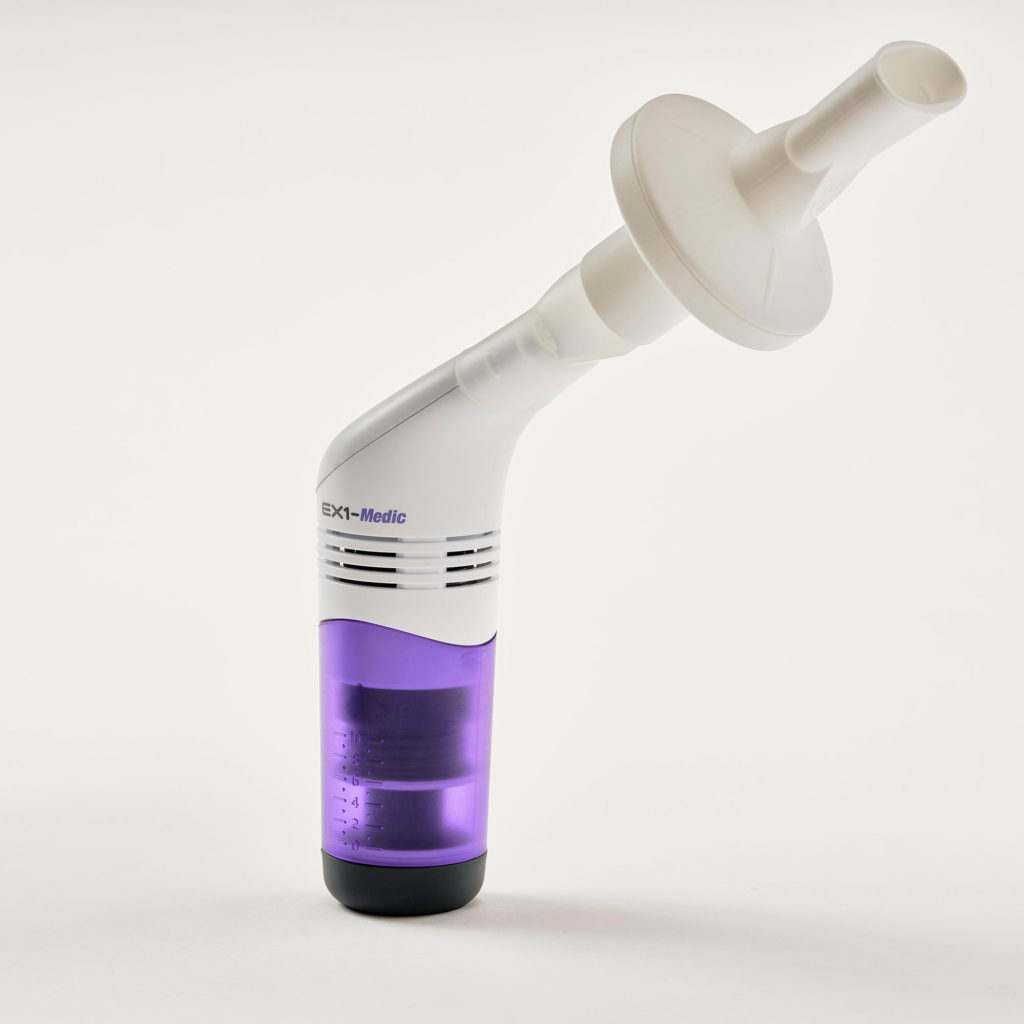
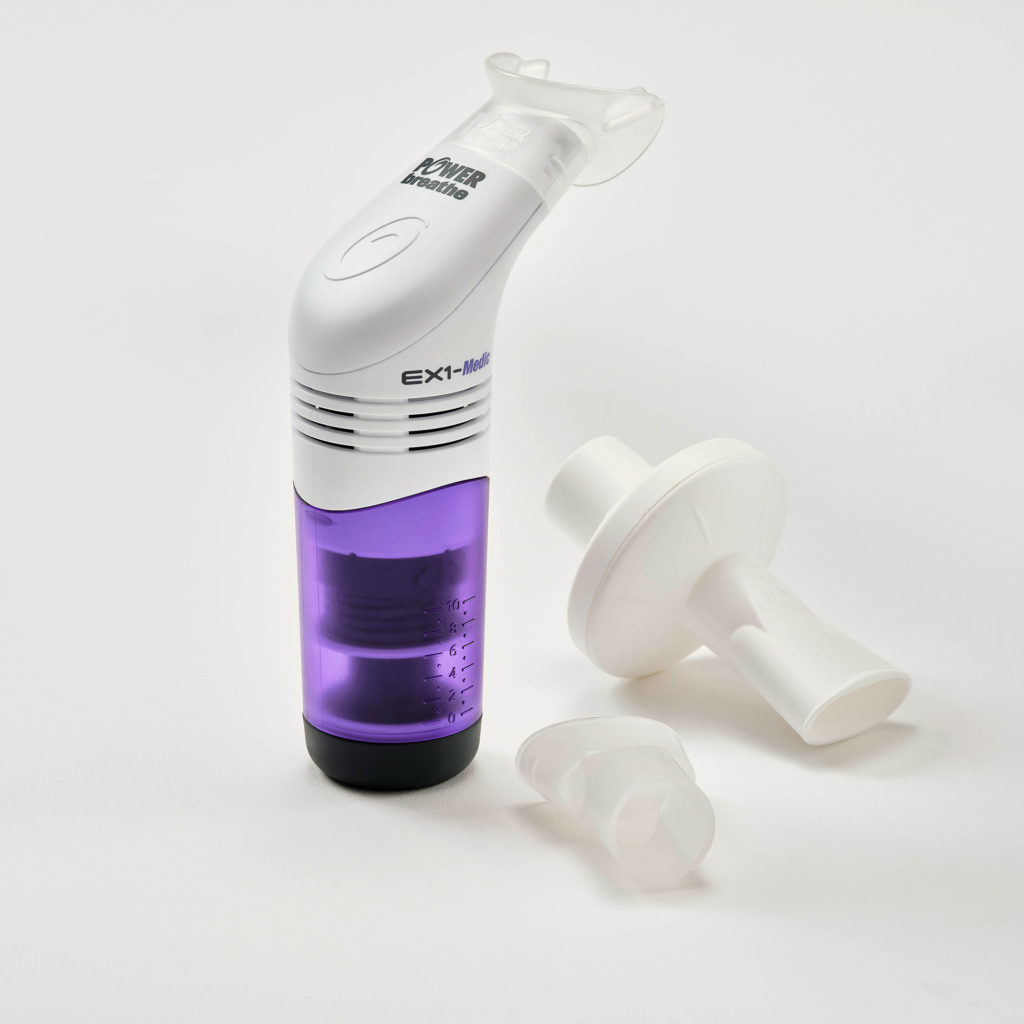
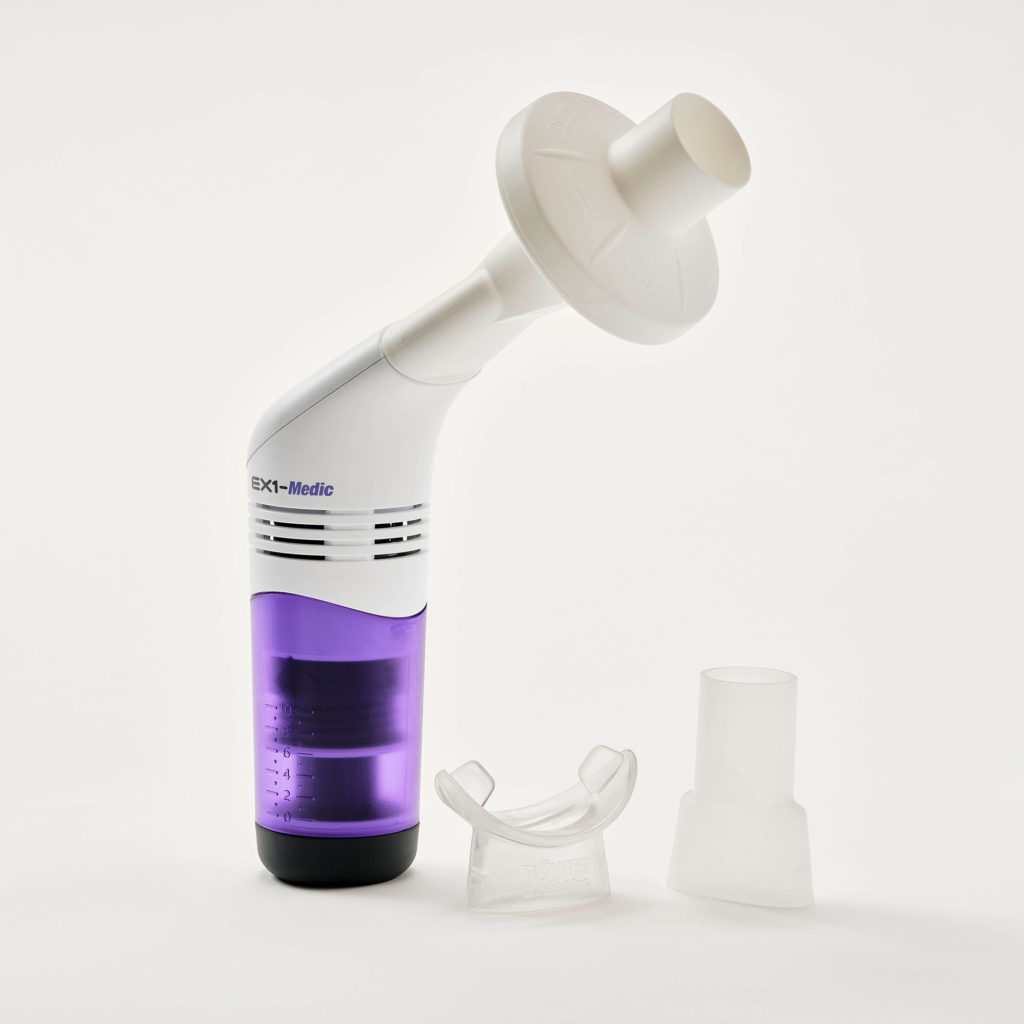
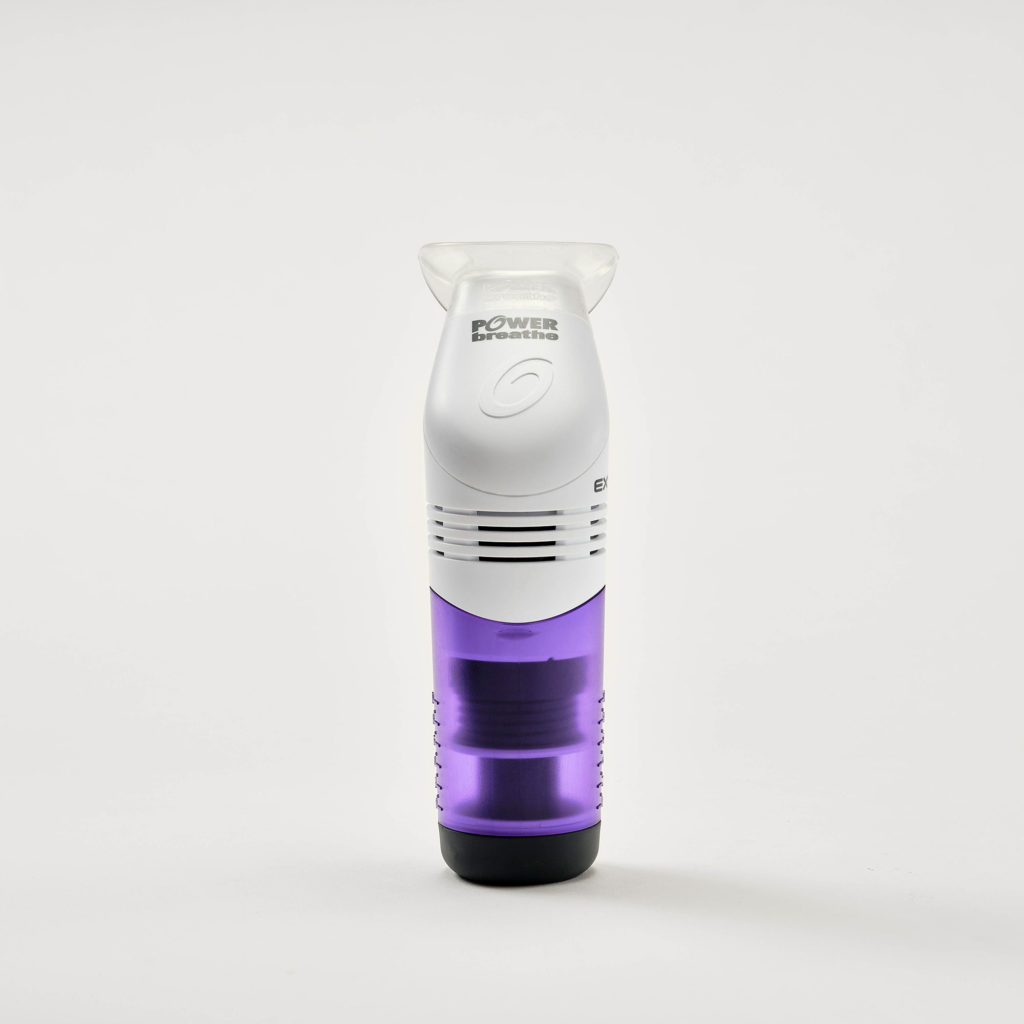
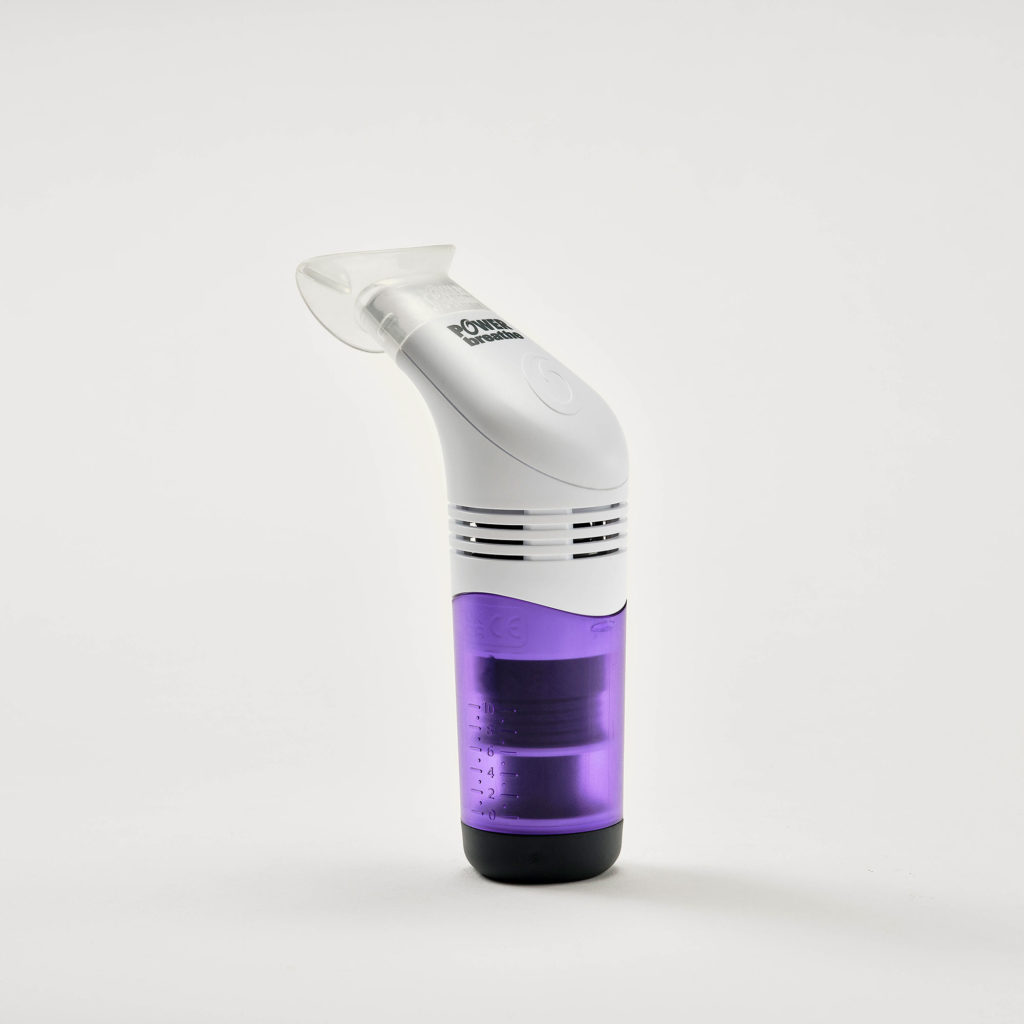
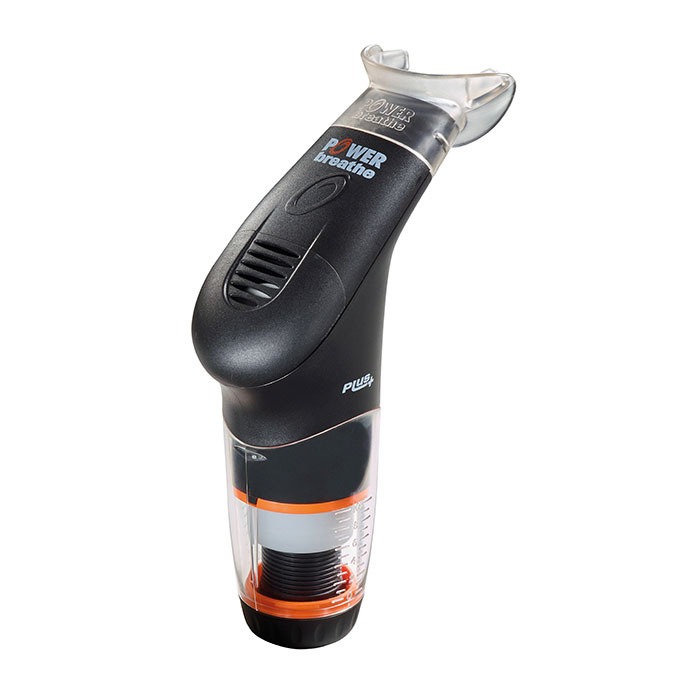
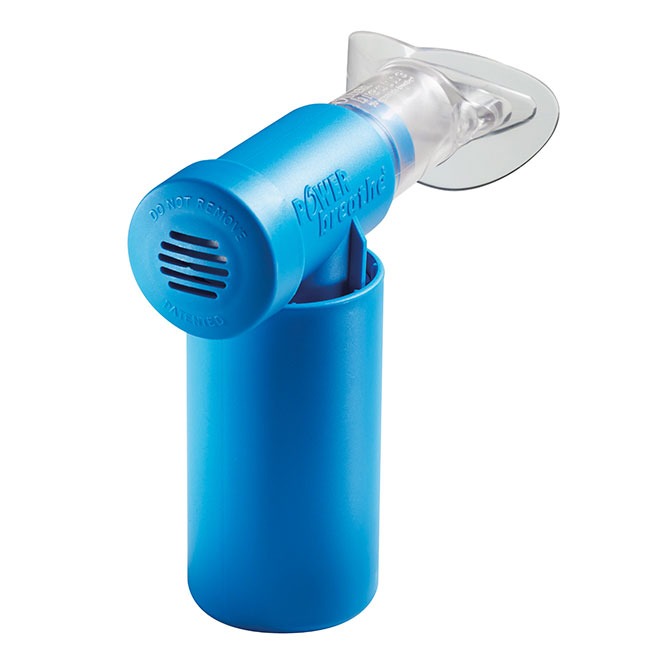
The POWERbreathe EX1-Medic is an Expiratory Muscle Training (EMT) device that is drug-free and easy to use. It exercises the expiratory muscles to enhance expiratory muscle structure and function and improve expiratory muscle strength and endurance.
Based on pre-launch feedback from clinical researchers and early adopters in medical and healthcare, the POWERbreathe EX1 Medic is being recommended for use with patients with compromised breathing, thanks to:
Pressure threshold loading – ensures training intensity is quantifiable, adjustable and appropriate.
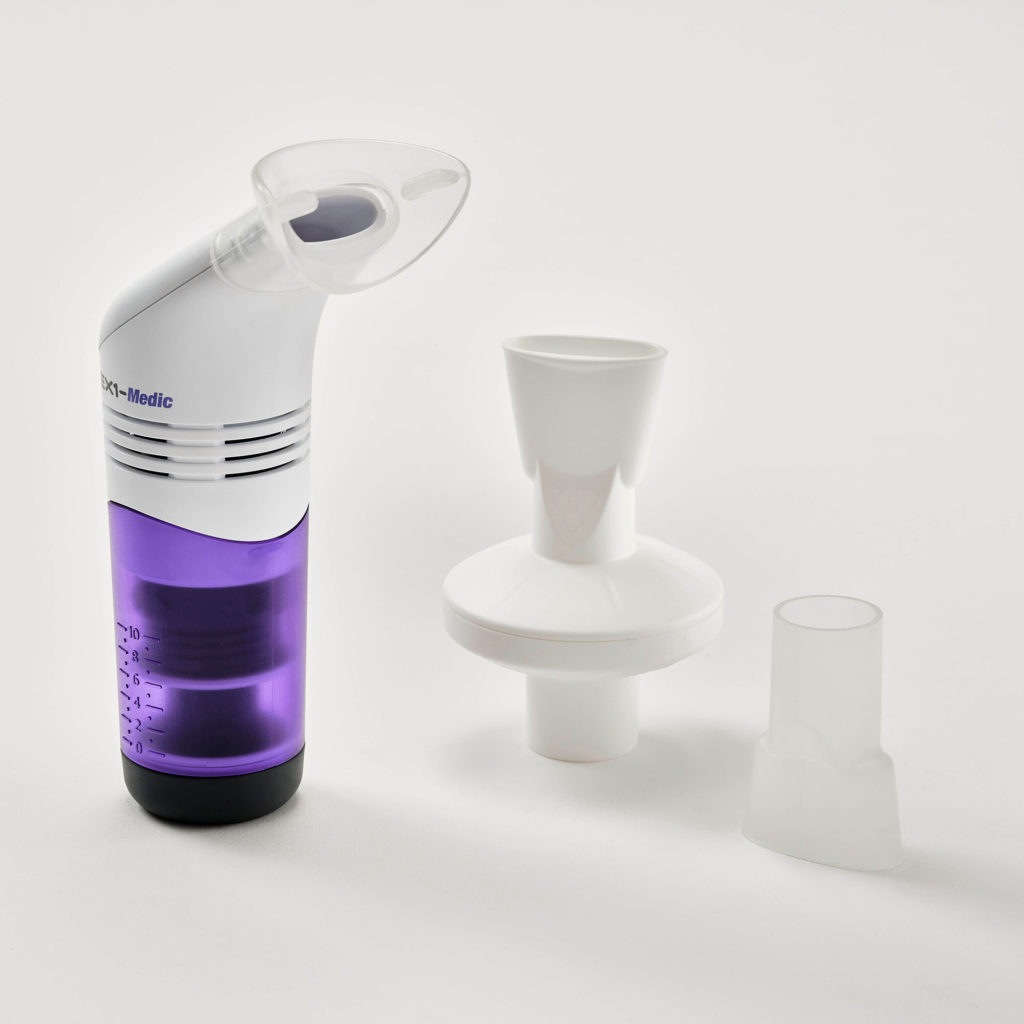
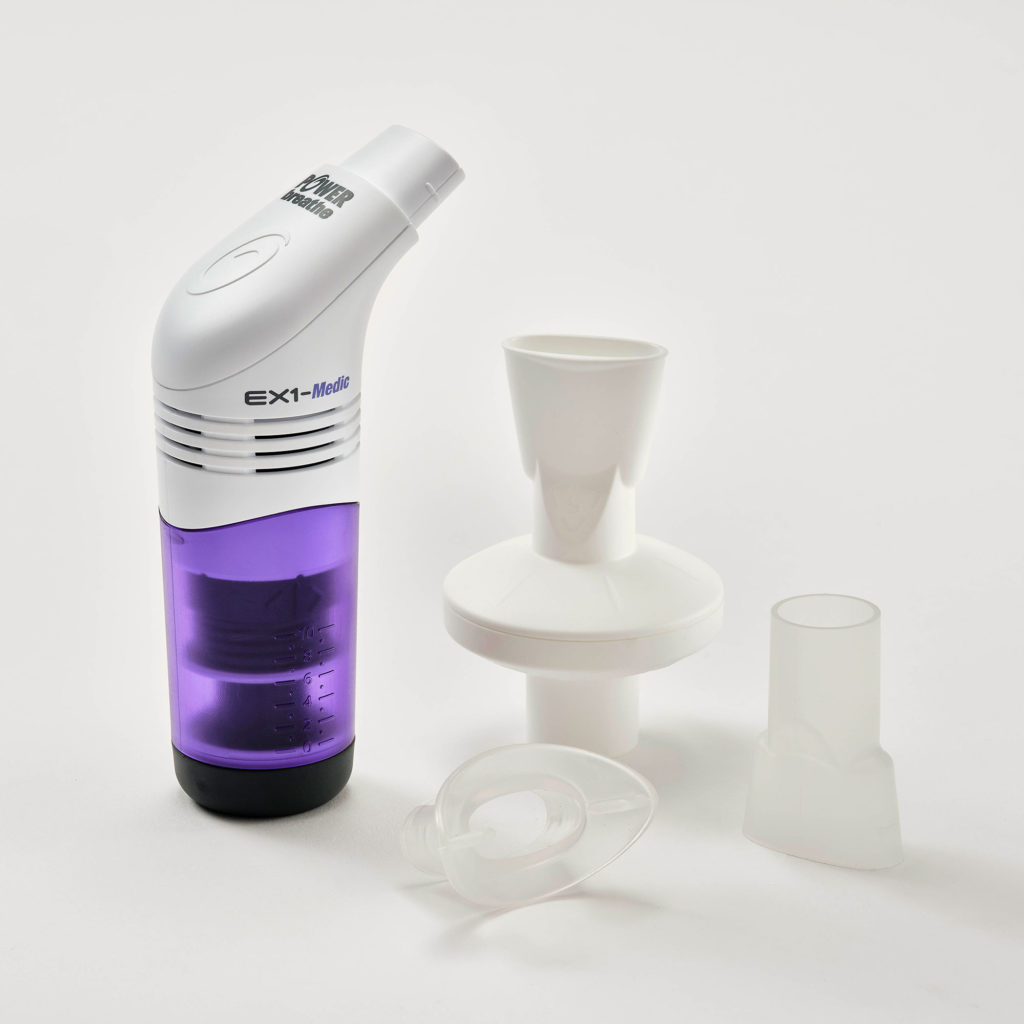
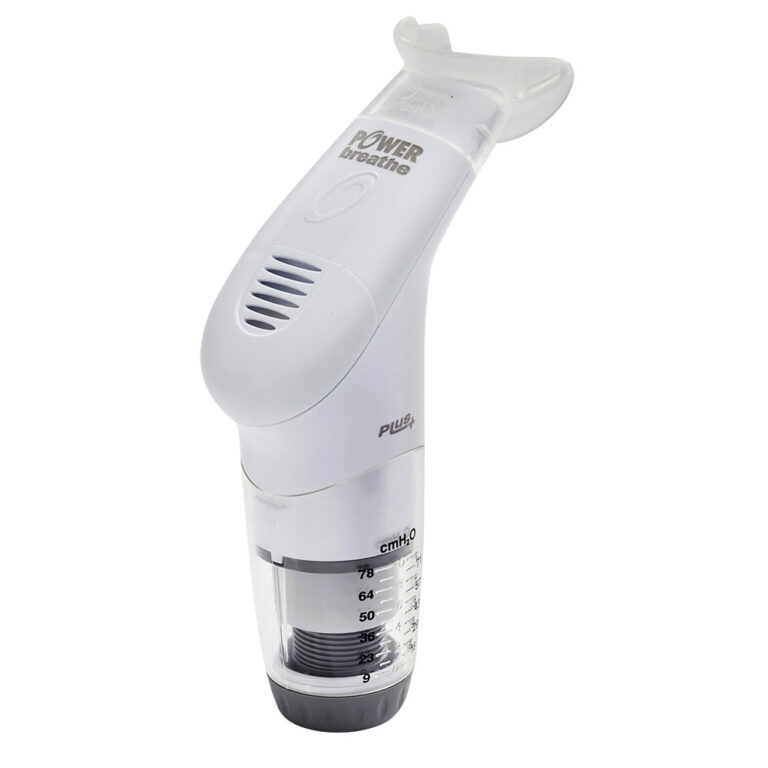
Ease of adjustment – the scale on the handle indicates the training level set.
Ergonomic design – based on our established POWERbreathe Medic Plus IMT device, the EX1 is designed to be easy to hold without obstructing air output and comfortable to use.
POWERbreathe EX1-Medic EMT Device Is Recommended For:
Patients who need to forcefully empty air from their lungs.
Patients with dysphagia and dysarthria (difficulty swallowing & speaking).
Older adults with reduced expiratory strength due to advancing age.
Features:
An easily adjustable ‘light’ expiratory load.
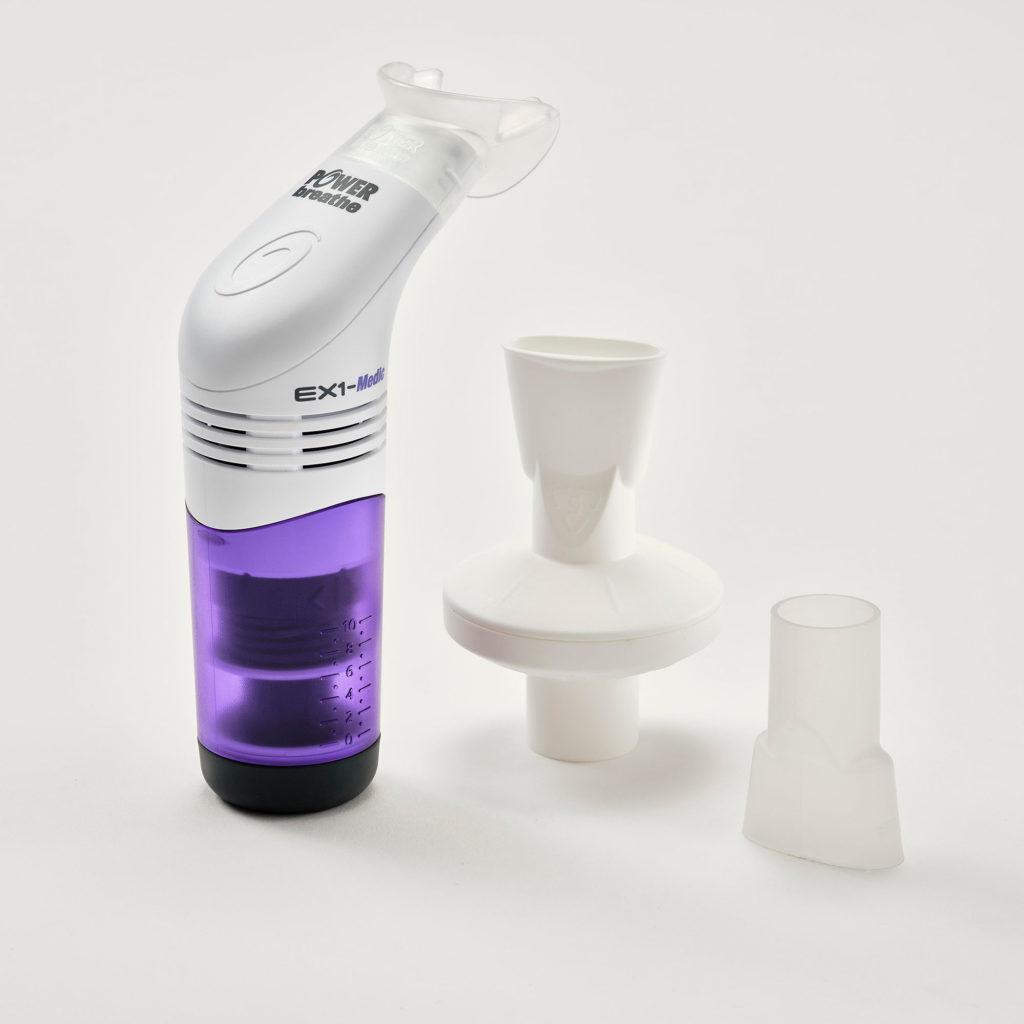
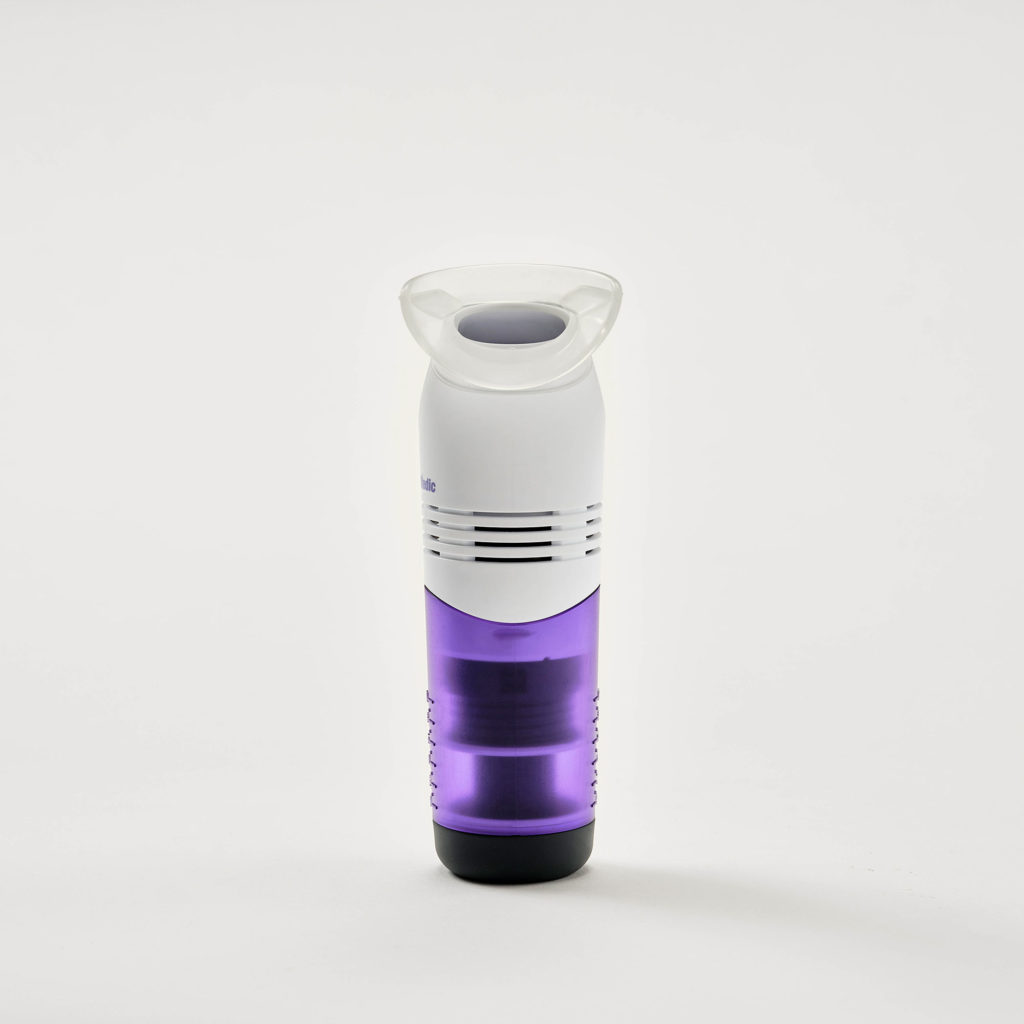
Comfortable Mouthpiece with inside bite tabs as well as an outer flange to keep it in place and provide a tight seal around the lips.
Easy identification and precise adjustment of expiratory load using the 0 – 10 training levels.
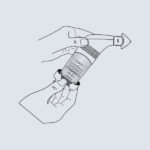
An ergonomic design that is to be held vertically so that the user doesn’t accidentally obstruct the airflow.
An easy-to-clean design.
What Is POWERbreathe Expiratory Muscle Strength Training (EMST)?
POWERbreathe EMST breathing devices use expiratory pressure threshold loading to exercise the expiratory muscles. This is also the method of breathing training that is used in the POWERbreathe Medic Inspiratory Muscle Training (IMT) device that is approved for prescription in the UK by the NHS. It is also the most widely studied type of breathing training and now the most used.
The POWERbreathe EX1-Medic features an internal, precisely calibrated, adjustable spring that provides the breathing load to the expiratory muscles.
Additional information
Weight
1 kg
Who Is Expiratory Muscle Training For?
The POWERbreathe EX1-Medic EMT device is helpful to patients who need to forcefully empty air from their lungs. It is particularly beneficial for patients with dysphagia and dysarthria, as well as for older adults as they begin to lose muscle strength due to advancing age.
Expiratory muscles are also often recruited in critically ill ventilated patients. Weakness of abdominal expiratory muscles leads to poor cough, and ineffective clearance of secretions from airways, and increases the risk for re-intubation. The four abdominal expiratory muscles that help in weaning, are the rectus abdominis, internal oblique, external oblique, and transversus abdominis.
POWERbreathe expiratory muscle training is for:
Dysphagia
Amyotrophic lateral sclerosis
Cough, such as chronic bronchitis
Subacute stroke
Dysarthria
Multiple sclerosis
Parkinson’s disease
Tracheostomy patients / ICU patients
Speech therapy
Sleep apnoea
Respiratory issues such as dyspnoea due to obesity or older age decline in functions
Cervical or spine injury
How Expiratory Muscle Training Works
The POWERbreathe EX1-Medic is a pressure threshold EMT breathing device developed to exercise the expiratory muscles. It uses a one-way, spring-loaded valve to maintain a constant breathing load while the patient exhales through the device. This breathing load is sustained throughout the exhalation, regardless of the patient’s airflow.
The internal, calibrated, spring-loaded valve requires the patient to produce an expiratory pressure sufficient to overcome the threshold load set and open the valve to enable expiration through the device.
When the patient generates enough expiratory power, the one-way valve opens at the set breathing load, allowing exhalation through the device. The spring-loaded valve requires a constant flow of exhalation for the valve to remain open. It’s this that presents a challenge to the expiratory muscles. The valve will then close completely as soon as the pressure is less than the breathing load set.
If, however, the patient is not able to produce enough expiratory force, the spring-loaded, pressure-threshold valve will remain closed, and no air will flow through the device. To rectify this and allow the patient to continue training, the training load can be reduced by using the adjustable external dial.
How To Do Expiratory Muscle Training
The patient will need to generate enough expiratory power in order for the calibrated, spring-loaded one-way valve to open at the set breathing load. This then allows the patient to exhale through the device.
The typical training protocol for expiratory muscle training is 5 x 5 x 5:
5 x exhales
5 times a day
5 days a week
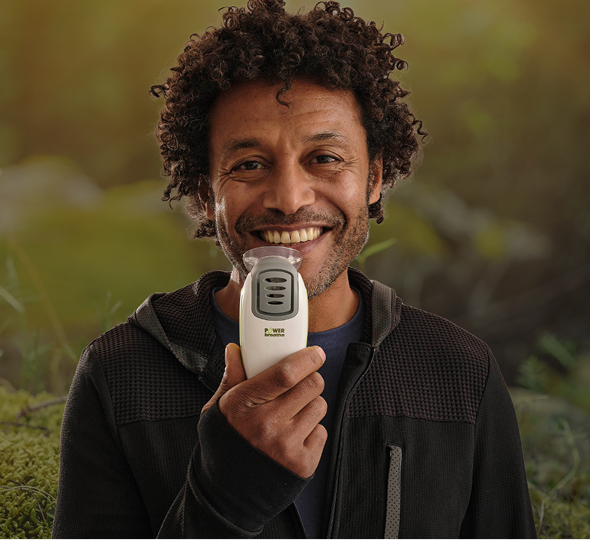
After taking an initial deep breath in, the patient should place the POWERbreathe EX1-Medic device in their mouth and maintain a tight lip seal around the mouthpiece.
They must then forcefully exhale through the device until the valve opens and air can be heard rushing out. This is to be repeated 5 times. After each set, rest for 1 minute before attempting the next set.
They must perform this set of 5 exhalations, 5 times per day for 5 days a week.
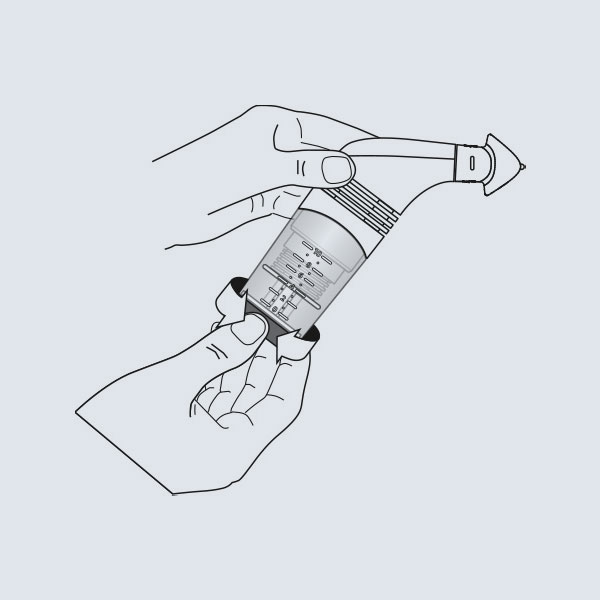
When the breathing load starts to feel easy to manage, the load can be increased using the adjustable dial and the expiratory muscle will be challenged once more.
After a stroke, patients will often experience an overproduction of saliva as a result of dysphagia, or if the face or lip muscles have been affected.
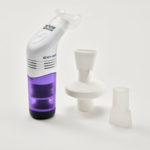
Using any POWERbreathe EMT breathing training device also produces saliva. This can be alleviated by removing the EX1-Medic mouthpiece, attaching a POWERbreathe Spacer, and then attaching a POWERbreathe Classic Mouthpiece. This is because stroke patients may find it more difficult to keep a tight seal on the standard mouthpiece provided with the EX1-Medic EMT device. We have been advised by medical professionals that our POWERbreathe Classic Mouthpiece can help to overcome this problem.
Adjustable Load Setting Range
POWERbreathe EMT devices use cmH2O as the unit of pressure. This is because it is what other, long-established devices use to determine lung health. It is the unit for measuring breathing on ventilators, CPAP and BiPAP machines, as well as, breathing training devices. Having the spring-loaded valve calibrated to increments of cmH2O ensures that the patient’s expiratory muscles will always reach an appropriate training intensity for eliciting benefits, such as improving expiratory muscle strength.
Adjustable Dial
The breathing load is easy to increase and decrease using the adjustable dial. This makes it easy to tailor the training for each individual patient. And because the POWERbreathe EX1-Medic uses pressure threshold technology, the training load is quantifiable. The patient can easily set the load on the POWERbreathe EX1-Medic device by using the marked training levels on the handle.
Adjustable Load Selection Range – cmH2O
EX1-MEDIC
EX1-LR
EX1-MR
EX1-HR
Level 0
10
10
35
55
Level 1
17
17
49
72
Level 2
24
24
63
88
Level 3
31
31
77
105
Level 4
38
38
91
121
Level 5
45
45
105
138
Level 6
52
52
119
154
Level 7
59
59
133
171
Level 8
66
66
147
187
Level 9
73
73
161
204
Level 10
80
80
175
220
10 Reasons To Choose POWERbreathe EX1
What's In The Box?
The following items come as standard with every POWERbreathe EX1 EMT purchase:
POWERbreathe EX1 EMT device
Mouthpiece
Storage pouch
Market specific user manual in the principle language of country where the device is purchased e.g. UK & Ireland – English; Spain – Spanish; Japan – Japanese.
No reviews yet—but that’s where you come in! Be the first to share your experience and help others discover something amazing.
Download ActiBreathe® App for POWERbreathe Smart Adaptor
After purchasing the POWERbreathe Smart Adaptor and scanning the QR code on the packaging, you are redirected to this page that provides links for downloading the ActiBreathe® App. Here you can download the app from the App Store (iOS) and Google Play Store (Android).
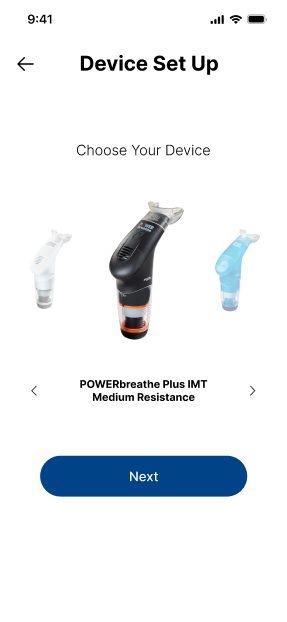
The ActiBreathe® App by POWERbreathe is a game-changing innovation that uses Bluetooth® wireless technology to transform your POWERbreathe breathing training. Use of the ActiBreathe® App is included with each purchase of the POWERbreathe Smart Adaptor and provides:
Test: Perform a Strength test using a Strength Test Plug to know what level to train at and set up a training plan customised to you!
Train: Perform training with real-time feedback as well as a wealth of stats that are provided to you after the end of the session!
Analyse: Review your training sessions and see how you have progressed in the last week, month or year!
Achieve: Receive Awards for your cumulative use of the app and when progressing through your training plan!
Get started by downloading the app from your preferred app store.
After installation, the ActiBreathe® App will ask you to complete a survey about your personal health and activity level. This information is essential for the app’s training level suggestion functionality, to enable customisation for each user’s lifestyle.
You will be asked to perform a Breathing Strength Test using the standalone POWERbreathe Smart Adaptor with Strength Test Plug (inserted). The app will guide you towards performing a successful test.
Based on the Breathing Strength Test value achieved, the app suggests the most appropriate training plan/s for you to select from.
You will then perform your first training session which contributes to establishing your recommended training plan.
After matching the resistance level on your POWERbreathe IMT/EMT device to the one set for training on the app and pressing the start button on the app, you will be able to see live stats during your breathing session, such as the time passed; number of successful breaths (where you have reached the required level); number of breath attempts (all attempts, not just those that reach the required level); a line graph of each breath; your current training activity type (sitting, standing, functional, etc); and resistance level.
John Carlow is a 45-year-old Personal Trainer, Nutritionist, and Karate Instructor. At an early age, he was diagnosed with asthma, which restricted his ability to be as active as his school friends. Today, however, John is a completely different person. Thanks to his POWERbreathe device, he has reduced his asthma attacks and reliance on rescue […]
You’re likely aware of how high blood pressure can affect your cardiovascular system, such as increasing your risk of stroke. But are you aware that it can be a risk factor for dementia, too? Research highlighted in New Scientist (2025) discusses this connection and how lowering blood pressure can reduce the risk of dementia and […]
Your voice is as personal to you as the features on your face. And until something happens to it, we don’t tend to give our vocal health a second thought. This is why World Voice Day, held on the 16th of April every year, reminds us to look after our voice health, just as we […]