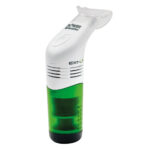
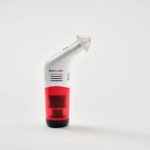
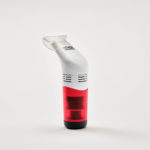
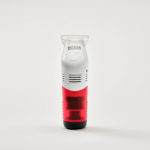
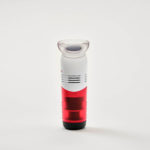
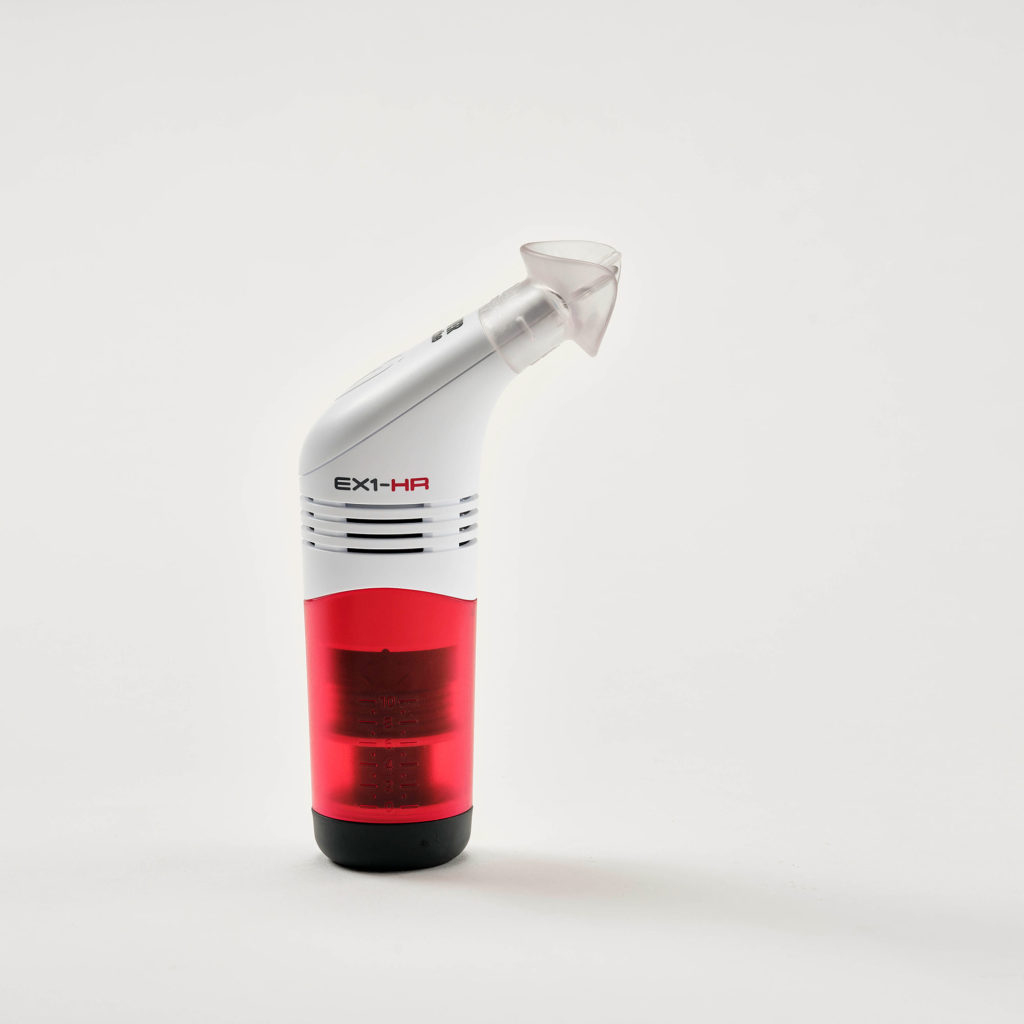
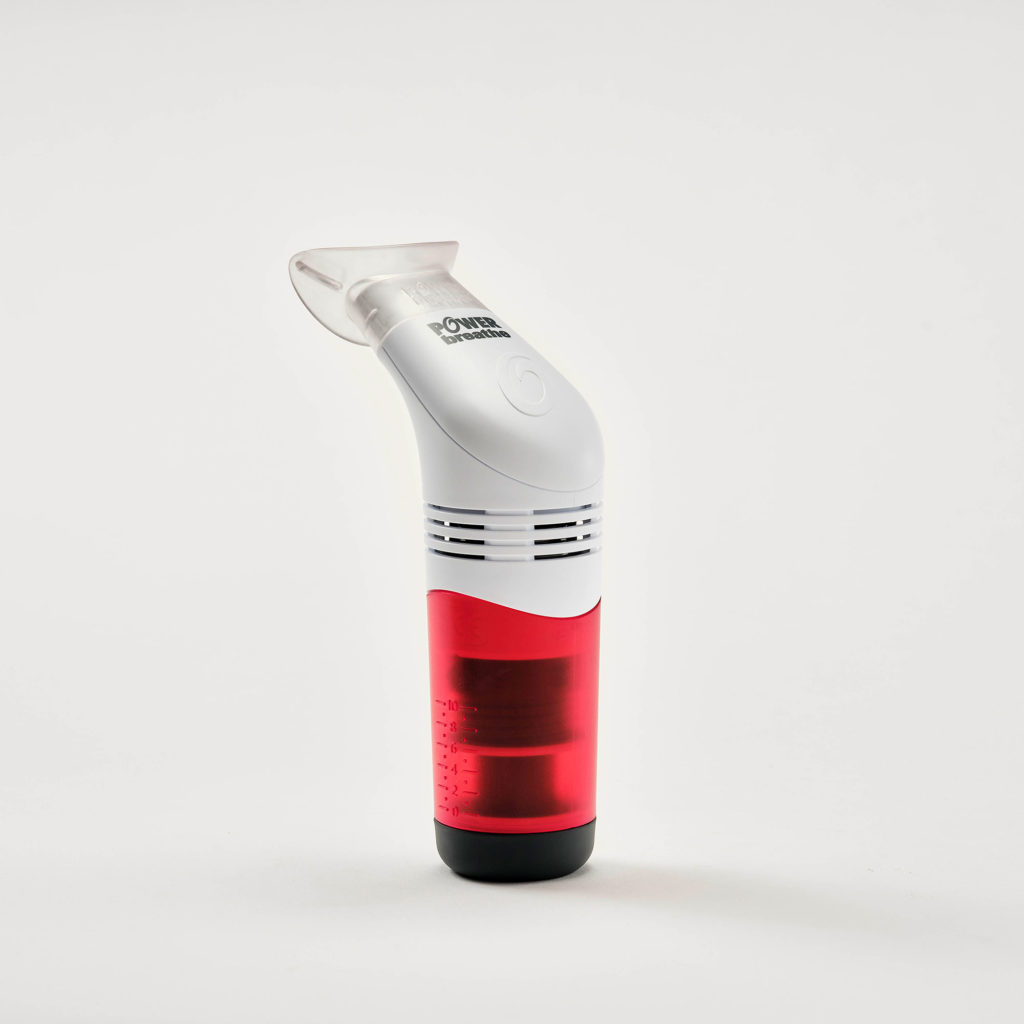
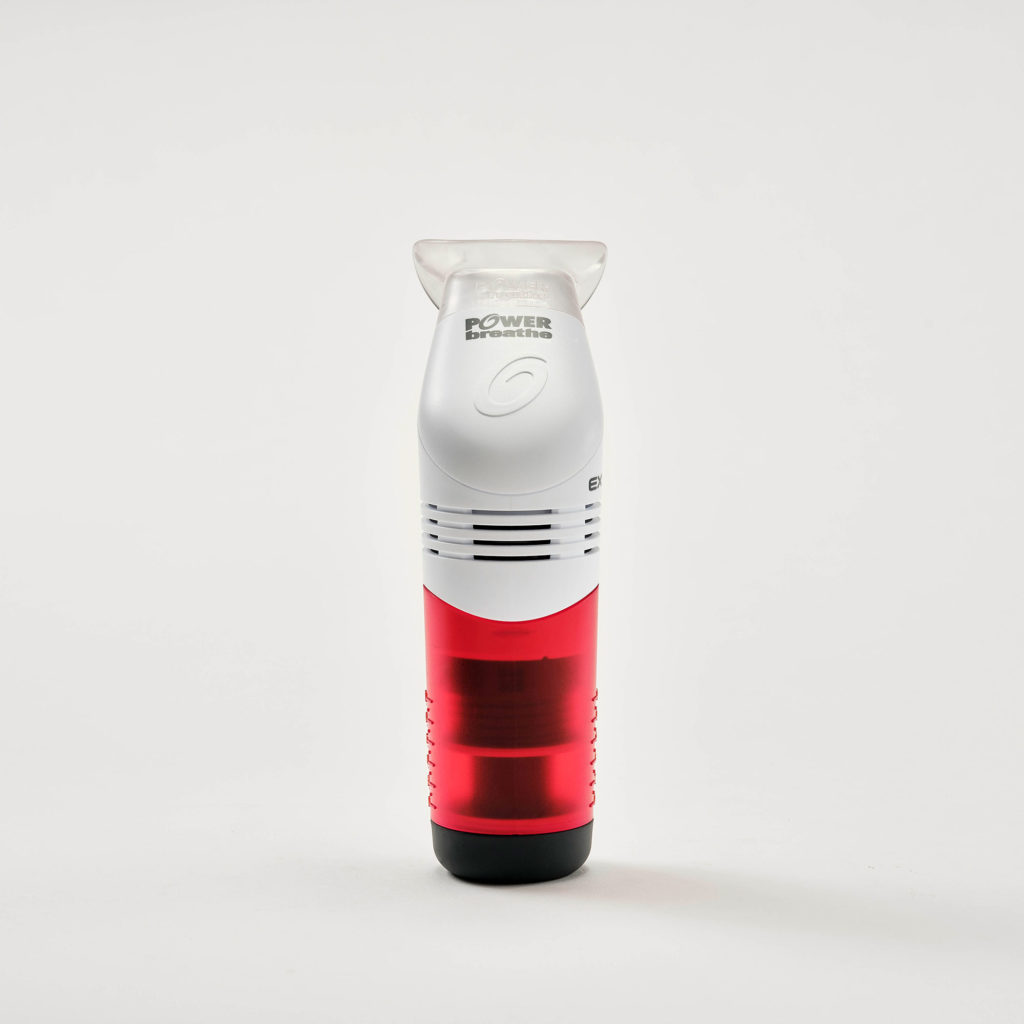
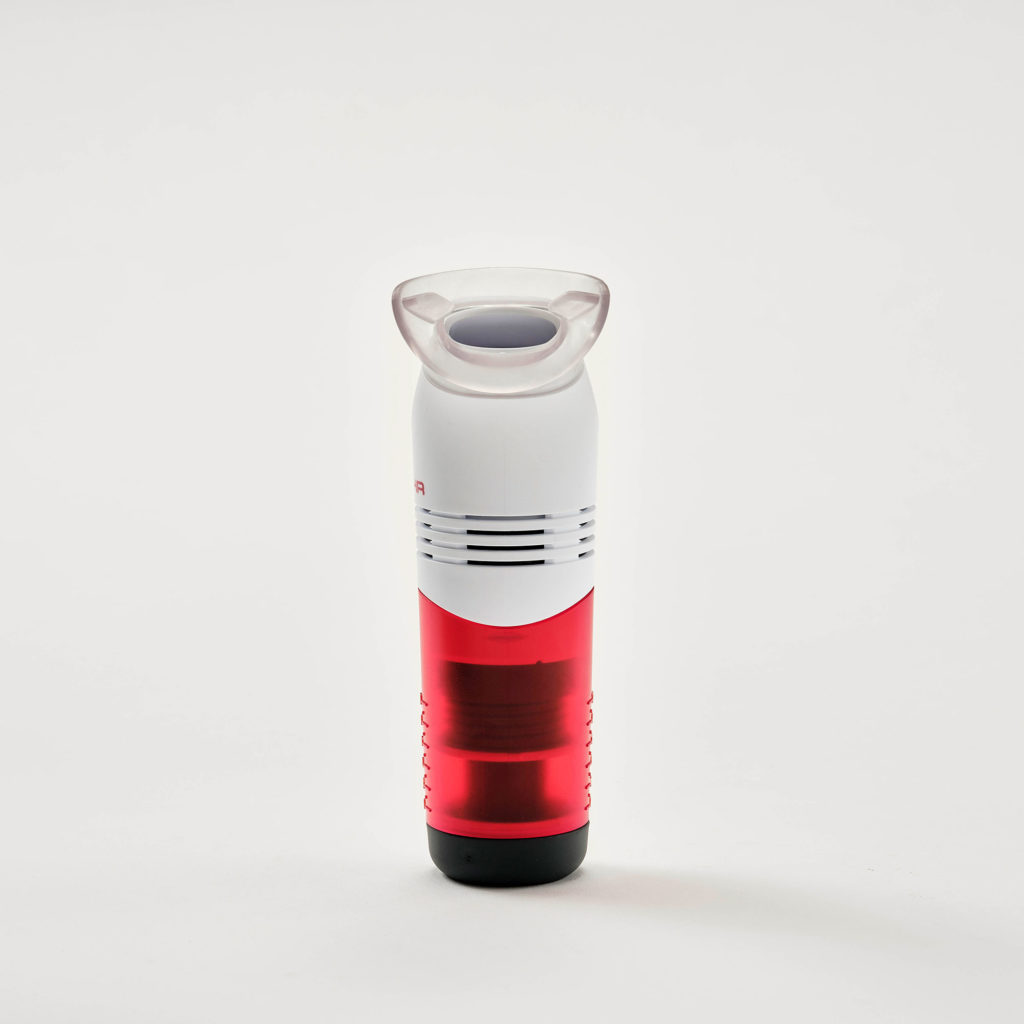
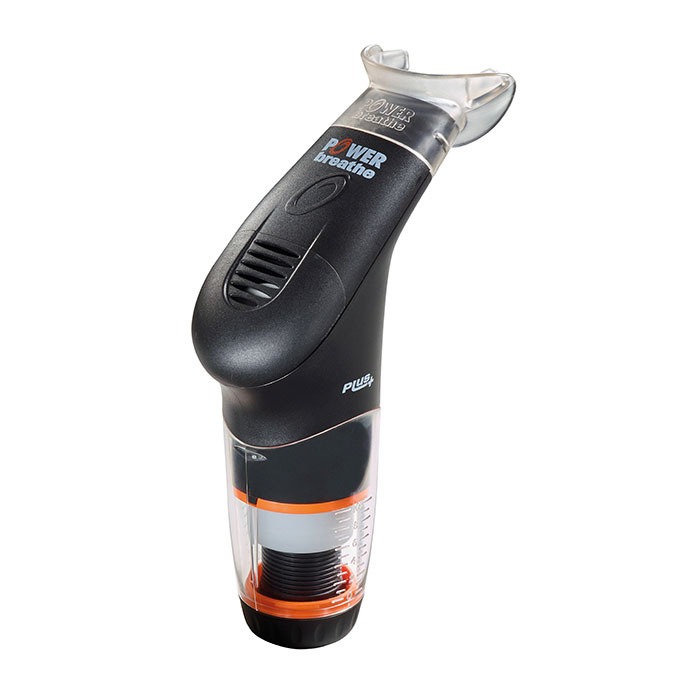
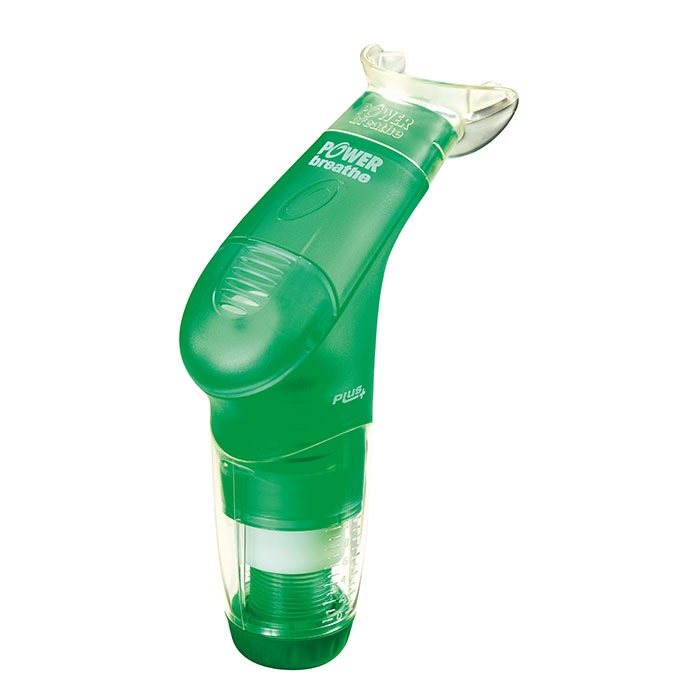
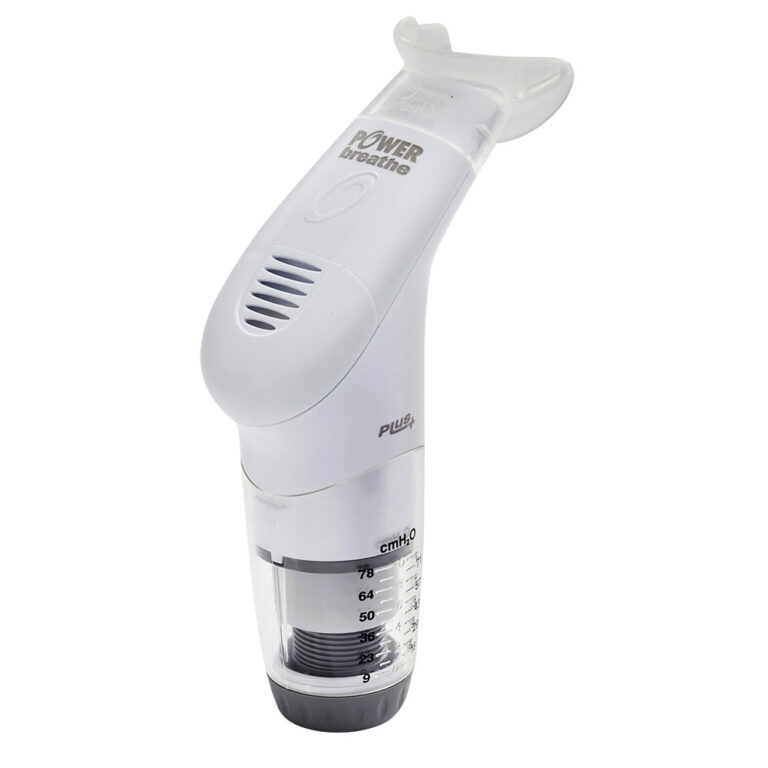
The POWERbreathe EX1-HR Expiratory Muscle Training (EMT) device is the most challenging of all our EMT devices. It exercises your expiratory muscles at an advancedlevel to improve your expiratory muscle strength and endurance.
The POWERbreathe EX1-HR offers the heaviest of resistances and is only suitable for those with large lung volumes, and who have reached the highest level on the POWERbreathe EX1-MR device.
It is a light, hand-held and easy to use drug-free breathing training device. It targets your expiratory muscles and exercises them using the principles of resistance training to increase your expiratory strength and endurance.
Professional athletes at the highest level of competition to improve respiratory endurance.
Professional weightlifters and freedivers to improve performance.
Military service personnel to improve tolerance to exhaustion.
Singers & wind musicians to increase breath stability and develop a constant flow of air with power and force.
Features:
Offers an adjustable ‘heavy’ resistance expiratory load.
The comfortable mouthpiece is designed to help provide a tight seal with your lips for effective training.
Precise adjustment of breathing load is made easy thanks to the 0 – 10 training levels.
The ergonomic design allows you to hold the device vertically without obstructing the airflow.
The design of the device makes it easy to clean.
What Is Expiratory Muscle Strength Training (EMST)?
Expiratory muscle strength training (EMST), along with Inspiratory Muscle Training (IMT) are elements of respiratory muscle training, designed to improve breathing strength and stamina. EMST targets your expiratory muscles only, including your abdominals, to improve expiratory muscle strength. POWERbreathe EMT targets your expiratory muscles to improve both expiratory strength and endurance.
Additional information
Weight
1 kg
Resistance
Who Is Expiratory Muscle Training For?
The POWERbreathe EX1-HR is suitable only for athletes, sportspeople and opera singers who have reached the highest level on the POWERbreathe EX1-MR device, including:
Elite athletes
National or international level competitors
Olympians
Professional and semi-professional high-performance athletes
World record-holders
Opera singers
Because your expiratory muscles play an active role in breathing, they will benefit from strength training with the POWERbreathe EX1-HR to improve your breathing stamina and ultimately your sports performance and voice projection during an operatic performance.
Your abdominal muscles are expiratory. Stronger expiratory muscles and abdominal muscles help to control your body when you run, twist and turn, such as in explosive power sports. Furthermore, with stronger expiratory muscles you are able to sustain a more prolonged physical effort, such as when competing. Finally, stronger muscles also help to prevent sports injuries.
Why the POWERbreathe EX1-HR is Beneficial For Sports People
The POWERbreathe EX1-HR is useful to sportspeople wishing to improve their sports performance. This is because maximal expiratory pressure (MEP) along with maximal inspiratory pressure (MIP) provides an insight into the breathing muscle endurance of an athlete. A sportsperson is able to improve both these measures by using expiratory muscle strength training (for MEP) and inspiratory muscle training (for MIP).
Why the POWERbreathe EX1-HR is Beneficial For Opera Singers
Your expiratory muscles play a role in breathing control and the flow of breath. And because your abdominal muscles are expiratory, opera singers will benefit from EMST breathing training. This is because as an opera singer you require a strong chest wall and abdominal muscles, and need to maintain large lung volumes.
How Expiratory Muscle Training Works
The POWERbreathe EX1-HR uses expiratory ‘pressure threshold’ loading to exercise your expiratory muscles. It is similar to resistance training with weights. The internal, precisely calibrated ‘heavy’ resistance spring provides the breathing load, or weight, to your expiratory muscles.
You must use the strongest, most forceful breath out in order to open the spring-loaded valve in the device.
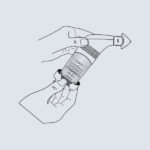
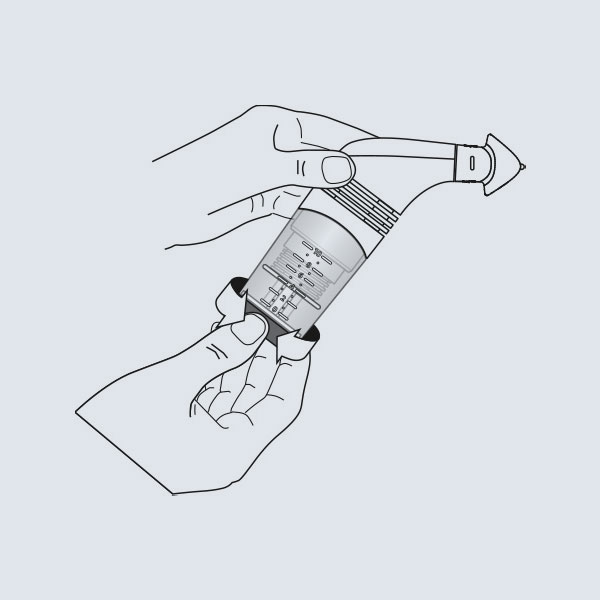
The POWERbreathe EX1-HR EMT device features an external dial on the handle that allows you to easily adjust the training load and therefore resistance. When you turn the dial to a higher training level, you are increasing the breathing load and the harder your training will be. If you adjust the dial to a lower training level, you are reducing the breathing load and the easier your training will be.
The POWERbreathe EX1-HR is the heaviest resistance of all POWERbreathe EMT devices. It is therefore very challenging for your expiratory muscles right from the start.
How To Do Expiratory Muscle Training
When you generate enough expiratory power, the calibrated, spring-loaded one-way valve will open at the load you set. This will then allow you to exhale through the device.
The typical training protocol for expiratory muscle training is 5 x 5 x 5 (5 x exhales, 5 times a day, for 5 days a week):
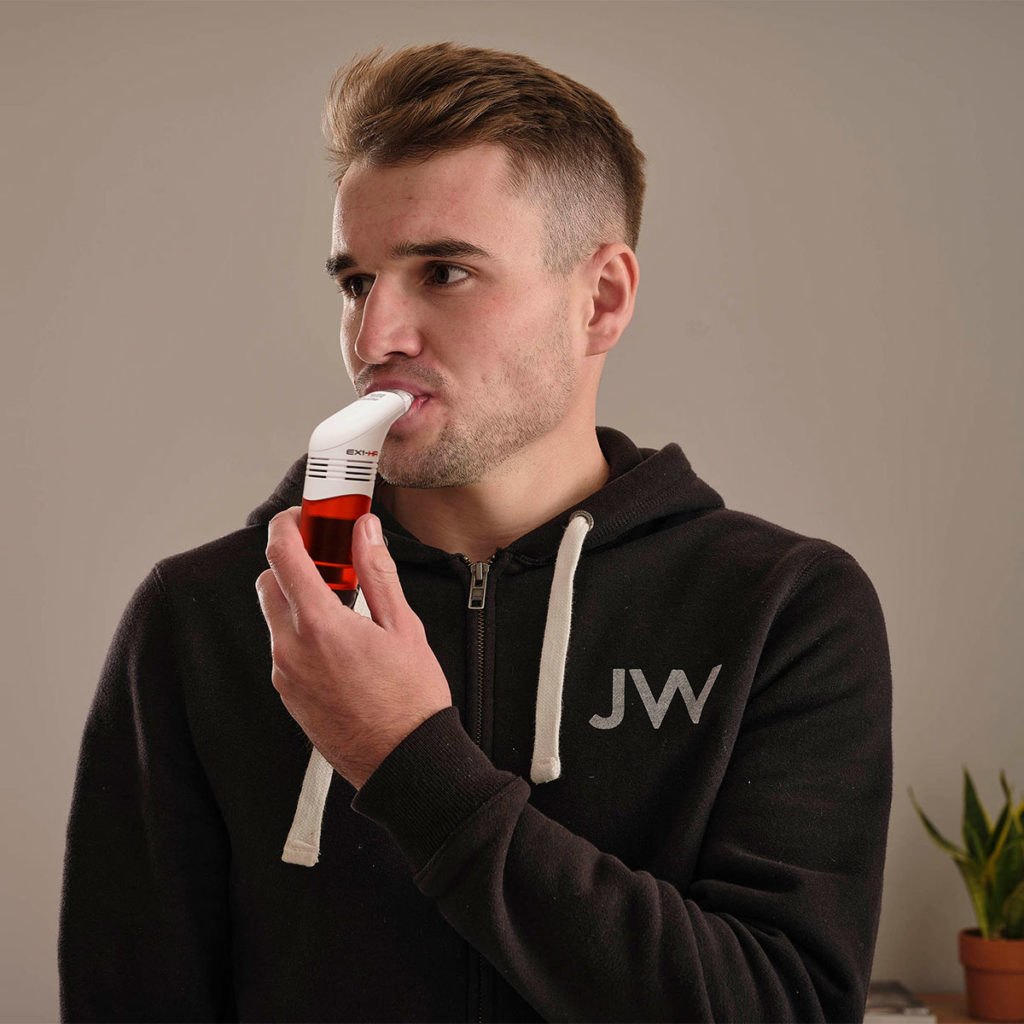
After taking an initial deep breath in, place the POWERbreathe EX1 EMT device in your mouth and maintain a tight lip seal around the mouthpiece.
Then, forcefully exhale through the device until the valve opens and you can hear the air rushing out. Repeat this 5 times. After each set, rest for 1 minute before attempting the next set.
Do this set of 5 exhalations, 5 times per day, and perform this training 5 days a week.
When you start to find training becomes easier to manage, it’s time to increase the breathing load by increasing your training level. We recommend turning the dial by a quarter-turn only each time to see if this is enough of an increase for your expiratory muscles.
Increasing your breathing load is how you continue to challenge your expiratory muscles and is essential if you want to keep improving. But before you turn the dial to a new training level, it is essential to get your technique right. Also, just as you would gradually increase your weights in the gym to prevent injury, so too should you gradually increase your breathing load.
POWERbreathe EMT devices use cmH2O (centimeters of water) as the unit of pressure. This is because it is what other, long-established devices use to determine lung health. In fact, cmH2O is the unit for measuring breathing on ventilators, CPAP and BiPAP machines, as well as, breathing training devices. By having the spring-loaded valve calibrated to increments of cmH2O, the adjustable load settings on the POWERbreathe EX1-HR EMT device mean that your training improvements are quantifiable. Having adjustable training levels also ensures that your expiratory muscles will always reach an appropriate training intensity for eliciting benefits, such as increasing your expiratory muscle strength.
Adjustable Dial
You can easily adjust the breathing load using the adjustable dial on the handle of your device. To make training easier you will need a lighter resistance. You can easily do this by reducing the training level. To make training harder you will need a heavier resistance. This is achieved by increasing the training level.
The load (in cmH2O) is easily set on the POWERbreathe EX1-HR device by using the marked training levels on the handle. Think of ‘load’ as weight lifted. So, the higher the load/weight (cmH2O), the harder it will be to exhale against the resistance and open the valve.
Adjustable Load Selection Range – cmH2O
EX1-Wellness
EX1-LR
EX1-MR
EX1-HR
Level 0
10
10
35
55
Level 1
17
17
49
72
Level 2
24
24
63
88
Level 3
31
31
77
105
Level 4
38
38
91
121
Level 5
45
45
105
138
Level 6
52
52
119
154
Level 7
59
59
133
171
Level 8
66
66
147
187
Level 9
73
73
161
204
Level 10
80
80
175
220
10 Reasons To Choose POWERbreathe EX1
What's In The Box?
The following items come as standard with every POWERbreathe EX1 EMT purchase:
POWERbreathe EX1 EMT device
Mouthpiece
Storage pouch
Market specific user manual in the principle language of country where the device is purchased e.g. UK & Ireland – English; Spain – Spanish; Japan – Japanese.
You’re likely aware of how high blood pressure can affect your cardiovascular system, such as increasing your risk of stroke. But are you aware that it can be a risk factor for dementia, too? Research highlighted in New Scientist (2025) discusses this connection and how lowering blood pressure can reduce the risk of dementia and […]
As your heart beats it sends blood, rich with oxygen, throughout your body. This oxygen-rich blood nourishes your heart and other muscles and organs. This process however becomes more difficult if you have heart disease, because this oxygen-rich blood flow to your heart reduces. This results in extreme tiredness and shortness of breath, making even […]
Every year, Stroke Prevention Day reminds us to pay more attention to protecting ourselves against stroke. This year’s focus is on high blood pressure because it is the leading factor behind a stroke. But the good news is that there are practical steps you can take to reduce your risk. This blog investigates how to […]